 Battery Match
by Dr. Matt Raiford
The data center landscape has changed. In 2022, after a surge of data center expansion and catchup from COVID coming to an end, suppliers of battery technology for data center UPS began to scratch their heads and wonder: what’s next? Little did they know, that the few hyperscale data centers coming on line were the beginning of a huge push, a push from mega users like AWS, Meta, ABC, Microsoft, and many others. The advent of AI-backed search engines, tools, and lucrative business assistive programs has created a buildout of a new tier of data center, creating extreme impacts to the grid as other users establish edge computing and other hyperscale data center buildouts. Over the last three years, CBI has watched this market and has worked with our member manufacturers around the globe developing new products and understanding about the impact of hyperscale data center buildout and how advanced lead batteries can solve associated grid strain.
Hyperscale and AI data centers consume 10-100 times more power than conventional data centers. Where does this leave the modern electrical grid? Let’s take the case of AI data centers. These computing facilities go through teaching/learning, optimization stages, and finally a fully commissioned operable phase. At each of these phases a different energy and power profile is required. This dynamic shift in power need puts differing strain on the grid requiring sudden power provision in the high need learning phase followed by sudden dramatic dips in power need periodically through optimization requiring compensation in voltage on the grid. Data center facilities at this scale serve as the canary in the mine, poor power quality at the center likely reflects ongoing power issues in the grid. The grid responsible for many, many other users and the increasing number of incredibly dense loads from data centers is compromising grid resiliency
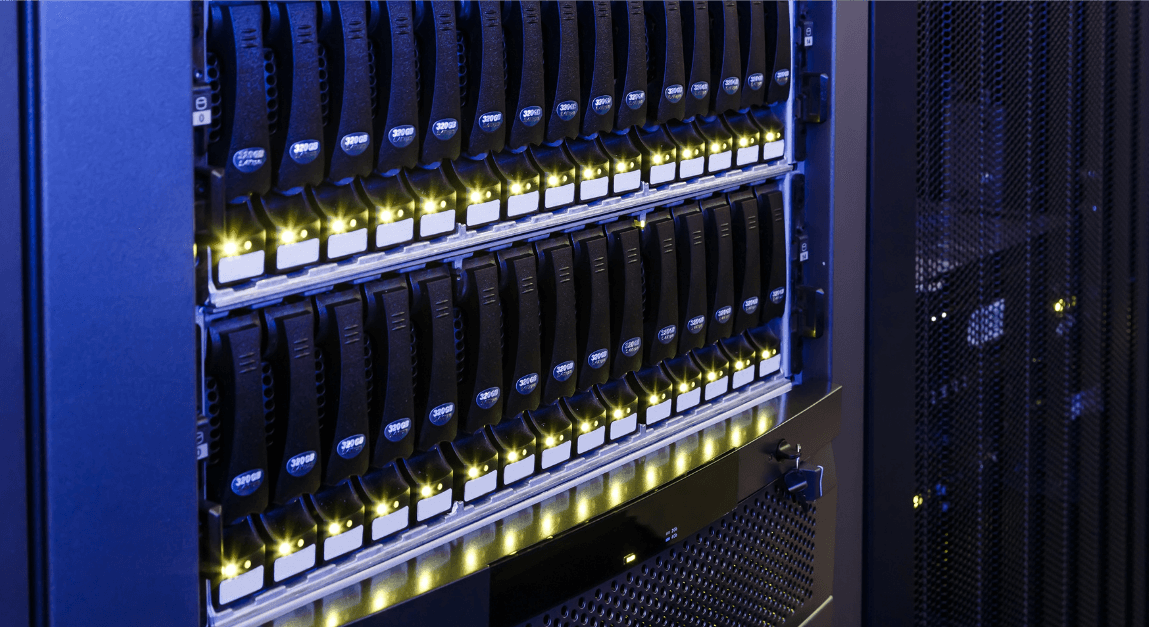
UPS systems backed by batteries, a prime example being advanced lead batteries, provide a flexible, scalable, safe solution to the volatile power requirements of the modern AI data center. These systems must provide sudden power during high load phases and accept power during major dips. Battery systems are now distributed throughout the inside and outside of the data center. Conventional battery rooms are still being used, with hyperscale data centers taking them to whole new levels. There are data center corridors in Canada and Brazil using hundreds of thousands of VRLA batteries to backup their operations. Resiliency does not just come from this typical backup, but now from batteries within the computational racks and hybrid ESS-UPS systems outside of the facility.
In the distributed energy resource need, batteries like small VRLA and lithium ion have been placed directly into the racks, smoothing voltage and frequency locally as each rack experiences different use. Safety and abuse tolerance are key, as well as total footprint of the battery. Lithium ion provides high performing options, but is not as robust to abuse tolerance as VRLA. On the other hand, VRLA provides a safe, tough, sustainable option – with a size problem. Advanced bipolar lead batteries are a possible best of both worlds solution and CBI are helping our member manufacturers understand the need for more energy dense lead batteries in this distributed role.
However, while increasing the reliable operation of individual racks is necessary, it is only a small piece of the resiliency puzzle. The duty cycles needed from batteries in these power-hungry data centers is severe, and multifaceted solutions from ESS have aided in increasing the resiliency of data centers while easing the strain on the grid. These ESS systems must be capable of providing voltage and frequency regulation and support, while also maintaining enough capacity for possible hour-long outages. Advanced lead batteries can be placed strategically due to their less severe fire codes classification, but ultimately these ESS solutions will be composed of not just lead-based systems, but lithium, flow, nickel and zinc. CBI believes lead batteries can tick many of the boxes associated with this outside ESS need, but is also looking at how lead batteries can operate cooperatively with lithium and flow systems to create unique solutions capable of providing resilient operations across all of the possible use case scenarios of hyperscale data centers.
ESS will become not just important for resiliency of data center, but will be crucial to speeding up the long queue times for grid interconnections. Grid interconnections are the bottleneck in bringing a hyperscale data center onto the grid and up to full operations. Deploying ESS allows data centers to take interruptible interconnection agreements, a historically disqualifying position for such a detrimental and sensitive power user. ESS provides the power quality in lieu of a better agreement, paving the way for fast grid interconnections and less time and money waiting for the optimal time to construct and commission new data centers. However, in this case, resiliency from the ESS is not just for possible outage issues but mandated outages. This means data center ESS and UPS must use reliable, rugged batteries to ensure no downtime.
Interested in how CBI is innovating and helping our members develop the best solutions for data center and grid resiliency? Look out for future blogs and updates on our website and social media platforms.


25/02/2026


2026 Consortium for Battery Innovation. All Right Reserved.